
It’s no secret that I am no fan of imposing strict processes on people. I believe creativity is people’s greatest asset. If something can be automated, then automate it fully and keep people free to create.
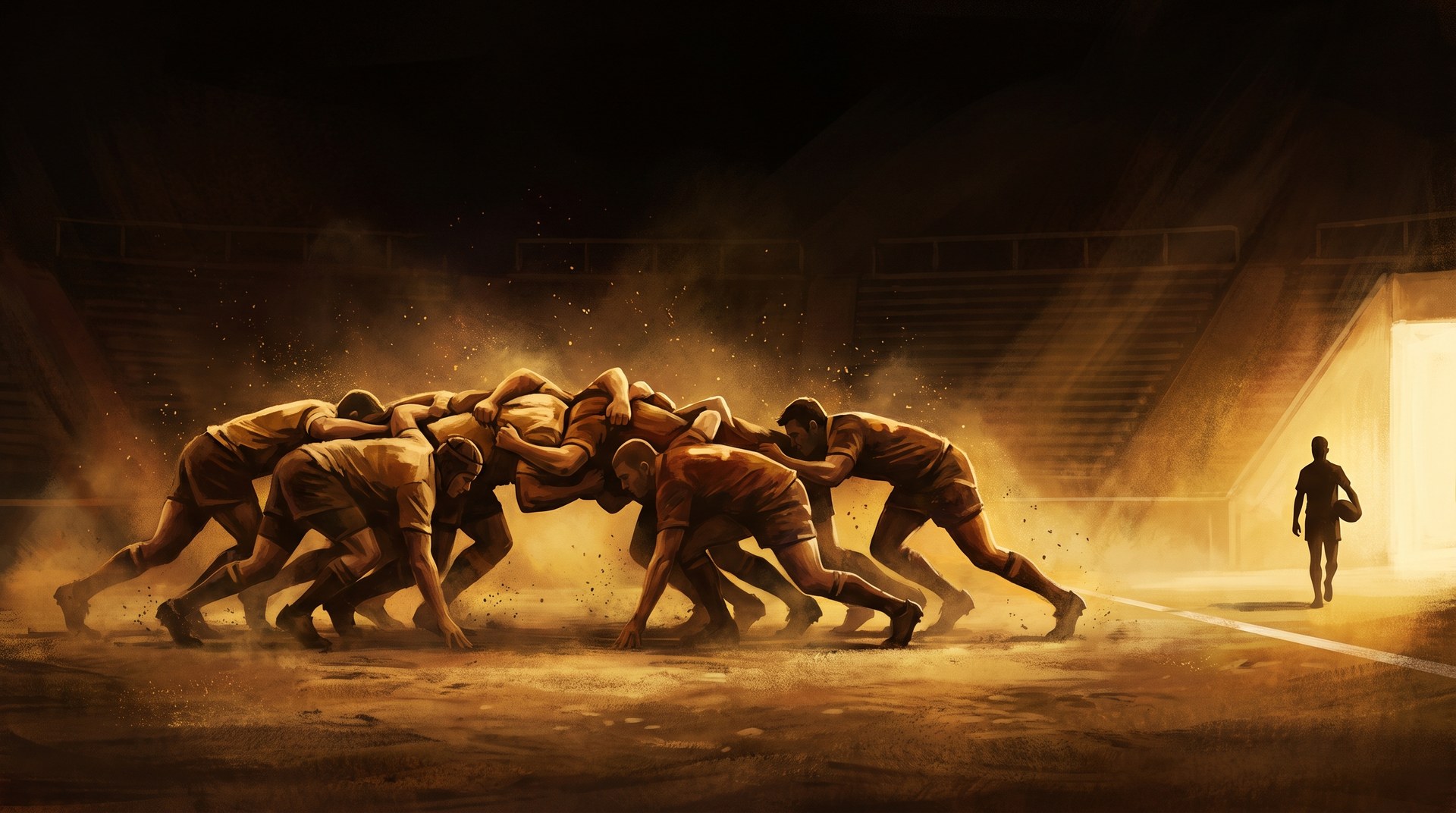
The word “scrum” is borrowed from rugby. A scrum is when both packs bind together and push to restart play.
Hirotaka Takeuchi and Ikujiro Nonaka took that word in 1986. A team should move as one pack, they wrote, and not hand work down a relay line.
Jeff Sutherland ran the first scrum at Easel in 1993. He and Ken Schwaber showed it at OOPSLA in 1995. Both signed the Agile Manifesto in 2001. The Scrum Guide arrived in 2010 and runs to 13 pages today.
Sprints of one to four weeks. Planning, a daily 15 minutes, a review, a retrospective. A product backlog, a sprint backlog. Three “accountabilities”: Product Owner, Scrum Master, Developers.
Back then development was the bottleneck. It was too slow.
A process was invented to speed it up.
I know the reply; Scrum was never about speed. It is about priorities, about coordination, about keeping stakeholders off the team’s back.
But there was a real push for speed, and it did speed things up. Scrum delivered on that promise.
With AI, development is an order of magnitude faster.
Now the process is the bottleneck. Scrum slows development down.
The human need for control is the underlying bottleneck.